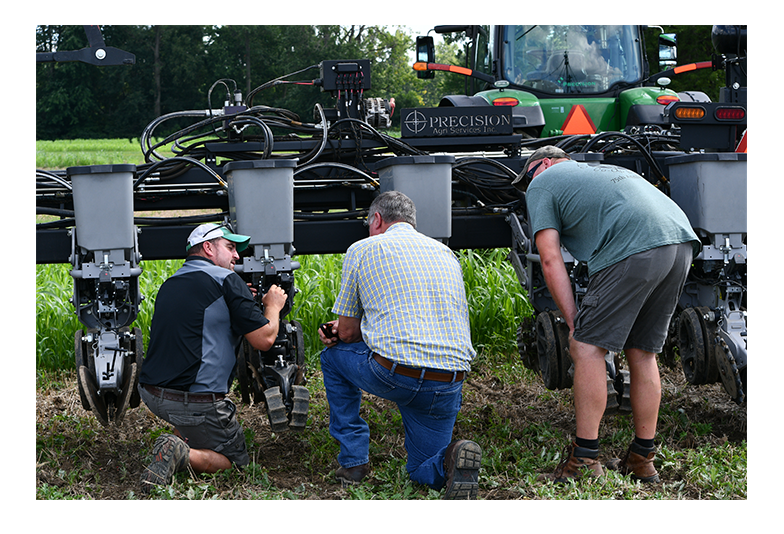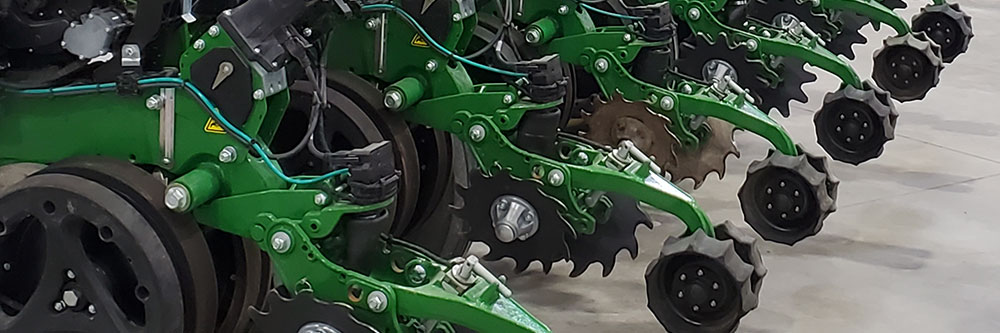
Keep your planter running all season without breakdowns. This guide shows you which parts wear out, when to replace them, and what spares to keep in your shop.
Quick Take
- Some parts wear out predictably—replace them before planting
- Other parts fail suddenly—keep spares on hand
- Regular inspection catches problems before they cost you acres
- 15 minutes per row unit now saves hours in the field
Parts That Wear Out Predictably
These components degrade gradually. Inspect them before each season and replace based on measurements, not guesswork.
1. Disc Opener Blades
When to Replace:
- At approximately 0.5" wear from new
- Use the business card test based on blade thickness (≈3mm), typically ~1–2" contact
- If you see chips or bent edges
Why It Matters: Dull blades create inconsistent seed trenches and poor seed-to-soil contact.
Upgrade Options:
Blade lifespan varies widely based on soil conditions, tillage, and acres per row. Instead of relying on acre estimates, measure wear directly.
General rule:
- Replace after ~0.5" of wear
- Or when blades lose proper contact
Keep on Hand:
- One extra row set (2 blades) in addition to standard stocking
2. Seed Meter Components
Brush Meters (Common on Soybeans)
Inspect:
- Brushes for wear and debris buildup
- Replace brushes every 1,000–1,500 acres in good conditions
- Replace after 80–120 acres per row in wet/sticky conditions
Finger Meters (Precision Planting Style)
Inspect:
- Finger set condition for cracks or wear
- Brush wear on adjustable systems
- Belt condition on SureFire systems + check drive wheel
- Backing plates
Keep on Hand:
- 2–3 spare brushes per planter
- 1 spare seed disc per meter type you run
- Graphite lubricant
3. Parallel Arms and Gauge Wheel Arms
Check For:
- Any side-to-side play in the arm
- Worn bushings (should have zero slop)
- Up to ~3/8" total vertical play (up & down) is a key wear indicator
- Bent or cracked arms
- Loose bolts
When to Replace:
- Immediately if you can wiggle the row unit
- Standard bushings: every 2,000–3,000 acres in heavy use
4. Gauge Wheels
Inspect:
- Tread depth and flat spots
- Bearing smoothness
- Housing wear
When to Replace:
- Worn tread or flat spots
- Bearings that don’t spin freely
Keep on Hand:
- 2–4 gauge wheels per planter
5. Closing Wheels
Types and Lifespan:
Rubber Wheels:
- 1,500-3,000 acres depending on soil
- Check for flat spots and cracks
Cast/Spiked Wheels:
- 3,000-5,000 acres
- Check for broken spikes or casting cracks
Poly Wheels:
- 2,000-4,000 acres
- Check for hub wear and bearing condition
Keep on Hand:
- Extra wheel hardware (bolts, spacers)
6. Seed Tube Guards and Scrapers
Inspect:
- Scrapers for wear (should contact blade fully)
- Guards for cracks or bends
- Mounting bolts for tightness
When to Replace:
- Scrapers: When material is worn thin
- Guards: If cracked or allowing seed deflection
Upgrade Options:
- Tungsten carbide scrapers last 4-8x longer than steel
- Valion seed tube guards prevent blade flex
Parts That Fail Suddenly
You can’t predict when these will break, but you can be prepared.
Drive System Components
Chains
- Inspect for tight links, rust, stretch, and seized links
- Replace if stretched beyond adjustment
Sprockets
- Check teeth for shark-fin shape
- Replace in pairs with chains
Bearings
- Should spin freely without grinding
- Replace sealed bearings as a unit
- Convert open bearings to sealed
Keep on Hand:
- 1 complete chain set per planter
- 2–4 common sprocket sizes
- 6–8 sealed bearings
Vacuum (vSet) Meter & Drive System
Inspect:
- Vacuum seals for leaks or wear
- Seed discs (correct type + condition)
- Singulator condition
- Ejector wheel wear
- Debris inside meter
- Vacuum consistency across rows
- Drive system (motor, wiring, or chain components)
Common Issues:
- Vacuum leaks → skips
- Worn/misaligned discs → doubles
- Wrong disc/singulator → population errors
- Seed treatment buildup → poor meter performance
- Drive failure → row stops planting
Best Practices:
- Use graphite on discs (never grease)
- Match disc + singulator to crop
- Check system for leaks pre-season
- Clean meters regularly
Keep on Hand:
- 1–2 seed discs per crop
- Vacuum seals
- Singulators
- Drive components (motor or chain parts)
Depth Adjustment Components
Depth Handles and Linkages
- Check for cracks
- Inspect linkage pins and clips
- Look for loose or worn adjustment points
- Master bolt wear
Springs
- Down pressure springs should maintain tension
- Closing wheel springs wear from constant flexing
Seed Firmers
Inspect:
- Check firmer tension
- Keeton firmers for cracks or material wear
- Mounting hardware for tightness
- Contact surface for soil buildup
- Check rounding/wear of firmer tip
Keep on Hand:
- 2 complete firmer assemblies
- Mounting hardware kit
Hardware and Small Parts
Don't overlook the little stuff. It'll stop you just as fast as major components.
Stock These:
- Assorted bolts in common sizes (1/4", 5/16", 3/8")
- Lock nuts and lock washers
- Cotter pins and hair pins
- E-clips and snap rings
- Rubber O-rings for seed meters
- Grease fittings
- Zip ties and hose clamps
Pro Tip: Keep a small hardware organizer on your service truck during planting.
Inspection Schedule
Summer
- Pressure wash entire planter
- Remove and store seed discs
- Check all bearings and bushings
- Inspect chains for rust
- Look for cracked welds or bent components
- Order replacement parts
- Measure all disc blades
- Replace worn parallel arms and bushings
- Install new scrapers and seed tube guards
- Check closing wheel condition
- Test all bearings for smooth rotation
- Lubricate all grease points
- Verify depth adjustment operation
Weekly During Planting
- Monitor population for meter issues
- Check chain tension and condition
- Inspect closing wheels for buildup
- Verify gauge wheel operation
- Dig up seeds to check placement
- Tighten any loose hardware
The Critical Spares Kit
Keep This Minimum in Your Shop:
Row Unit Spares:
- 2 parallel arm assemblies
- 4 gauge wheels with bearings
- 4 closing wheels
- 2 seed tube guards
- 1 set of scrapers
Seed Meter Spares:
- 2-3 brushes per meter type
- 1 seed disc per meter type
- Meter drive belt (if equipped)
Drive System Spares:
- 1 complete chain set
- 4 common sprockets
- 8 sealed bearings
Hardware Kit:
- Assorted bolts and nuts
- Pins, clips, and snap rings
- Spare depth springs
- Grease fittings
Field Emergency Kit (Keep on Tractor):
- 2 closing wheels
- 1 gauge wheel
- Chain master links
- Duct tape and zip ties
- Basic hand tools
- Grease gun
Upgrade Priority List
If you're improving your planter, tackle these in order:
- Priority 1: Depth Control - GBGI parallel arms and gauge wheels; Eliminate slop in depth adjustment.
- Priority 2: Seed Placement - Sharp disc openers (carbide upgrade); Quality seed tube guards; Seed firmers (Keeton Low-Stick).
- Priority 3: Closing System - Premium closing wheels for your conditions; Proper spring tension; Matched left/right wheel setup.
- Priority 4: Metering - Precision metering upgrades; Better brush systems; Population monitoring.
When to Call for Help
Replace Yourself:
- Blades, scrapers, and guards
- Closing and gauge wheels
- Chains and sprockets
- Basic bushings
Get Professional Help:
- Parallel arm installation requiring alignment
- Meter system upgrades
- Hydraulic down pressure systems
- Electronic population monitor calibration
Bottom Line
Successful planting isn’t about having a perfect planter. It’s about maintaining the one you have. Replace wear parts on schedule, keep critical spares in stock, and inspect regularly.
The math is simple: A $200 parallel arm replacement prevents uneven depth that costs you 5–10 bushels per acre. A $30 set of scrapers maintains seed placement worth several bushels. A $15 chain prevents a breakdown that costs you a day of planting.
Spend money on parts now, or lose bushels at harvest. The choice is yours.